Dig ‘in: Iceage, Kelley Stoltz, Kurt Vile
Check out what the No Wristbands team is listening to and what’s in our show calendars this month on our latest Dig ‘in.
INCOMING
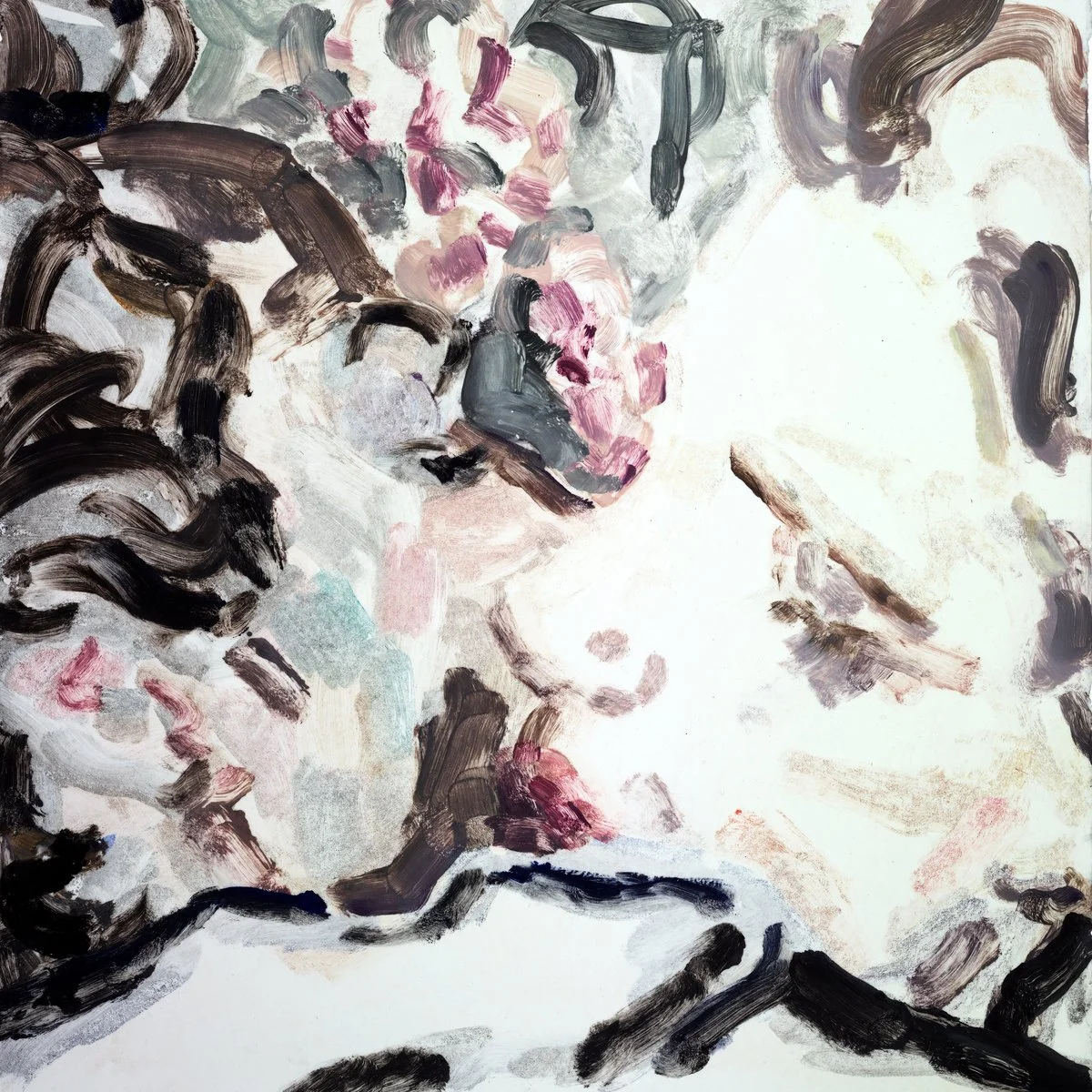
Iceage - For Love of Grace & the Hereafter (Mexican Summer LP)
I wrote a little while back about Elias Rønnenfelt’s solo record Heavy Glory and how it found him going soft—folk and Americana, all that warm balladry, a totally different register than anything Iceage has done. At the time I wondered what that detour would mean for the band once he came back to it. Now I have my answer, and it’s about the last thing I expected: Iceage’s leanest, meanest, most danceable record in over a decade.
This is album six, and after the denser, more orchestrated sound of Beyondless and Seek Shelter, For Love of Grace & the Hereafter strips things back to something closer to their teenage-punk roots—except sharper, funnier, and weirdly more fun than anything they’ve made before. Opener “Ember” is the tell. It’s loose and jangly, very Strokes-ish sounding with Rønnenfelt half-singing/half-talking lines like “I love you in an ominous way” over Ramones-style riffs. For a band that’s spent a lot of time being moody and capital-S Serious, hearing them sound like they’re having a genuinely good time is a small revelation.
“No Fear” is where the religious undertow of the record really opens up. It’s shimmering and almost hymnal, Rønnenfelt singing about a “blessed shore” and a place beyond for those who rest in sleep—there’s a Bill Callahan quality to how he blends the spiritual and the physical, and it’s one of the most affecting moments on the record precisely because it doesn’t try to be cool about its faith.
Then there’s “mother-of-pearl,” which might be my favorite thing here. It’s a genuine narrative song—a sex worker named Mary finds out she’s pregnant, the whole scene painted with this surprising tenderness—set to a jaunty, double-time bounce that sounds like the Strokes deciding to get a little post-punk. The contrast between the music’s lightness and the heaviness of what’s actually being sung about is exactly the kind of thing Iceage does better than almost anyone. By the end, the song lands somewhere genuinely hopeful, which is not a word I expected to use about this band.
What gets me most about For Love of Grace & the Hereafter is that it doesn’t feel like a band returning to an old sound out of nostalgia. It feels like a band that took a detour—through Rønnenfelt’s solo work, through their own maturity—and came back to their roots with new tools. Fifteen years after New Brigade, Iceage sound more alive than ever, it is truly impressive. -Mark Joyner
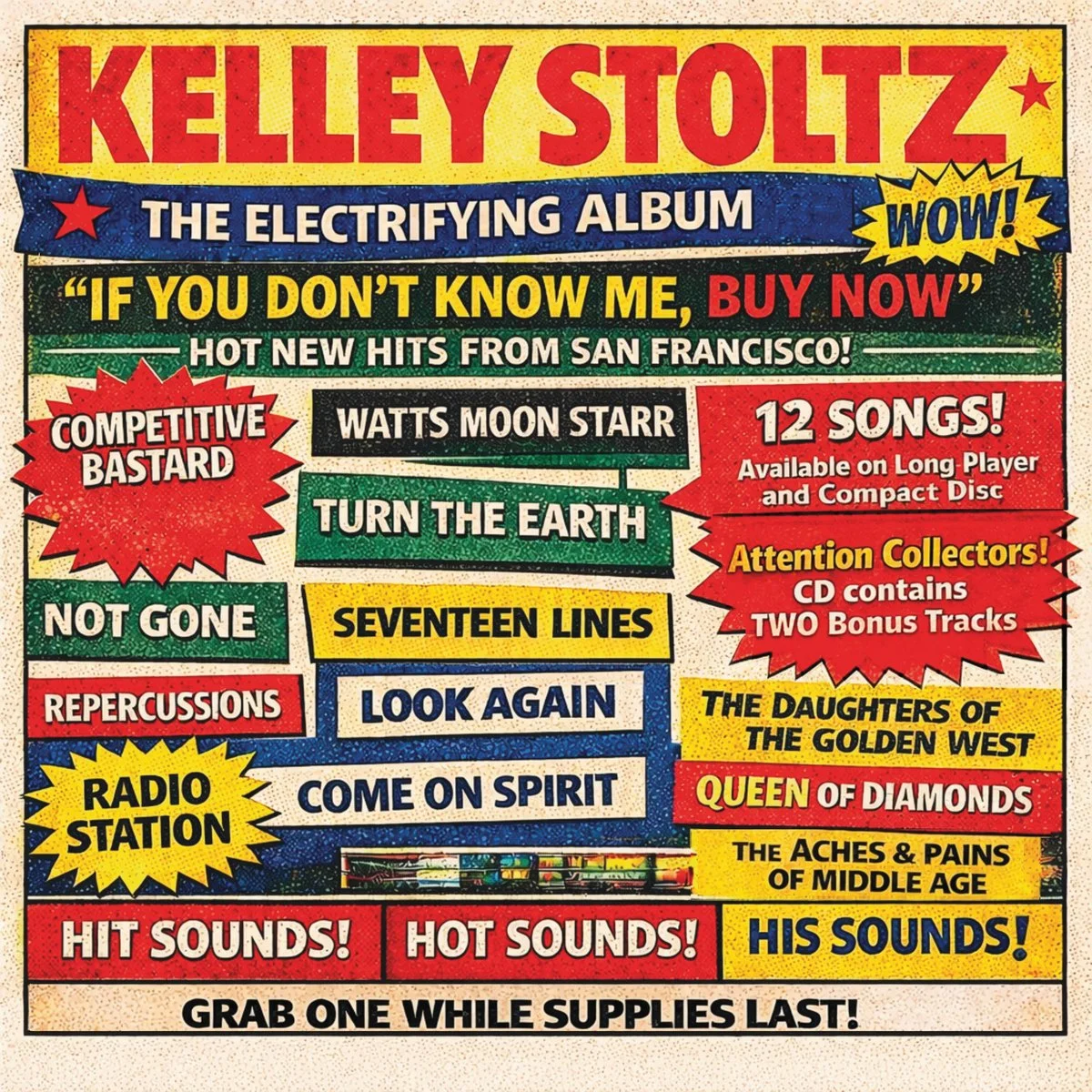
Kelley Stoltz - If You Don’t Know Me, Buy Now (Dandy Boy Records LP)
The pun of Kelley Stoltz’s new album title, If You Don’t Know Me, Buy Now, also is good advice. This, his 19th album, is indeed a good place to dive in if you don’t know his work by now...or even if you do.
Stoltz embodies the best of indie music: he’s a talented multi-instrumentalist who writes, produces, and plays almost everything on his recordings. He has a long history in the pop community, playing in other bands, performing live with his heroes (Echo and the Bunnymen, Robyn Hitchcock), and tapping friends for musical cameos.
The new album is a thoughtful, humorous, and self-effacing symposium on Stoltz’s personal and professional progress. In the opening cut, the funky, Bowie-esque “Competitive Bastard,” he deadpans, “I used to be a competitive bastard / No one likes a competitive bastard / Don’t work for exposure any more...Now I don’t waste that time any more.”
The stellar “Not Gone” is the album’s thesis statement. It kicks off with a keening riff that evokes The Clean; the lyrics beautifully explore love, posterity, and the creative process: “And in no time it took me to write this song / I catch epiphanies before they’re gone.... / One family to hold me, one muse that still controls me, ten friends who really know me, keep pushing me on / The universe tries to tell you somehow, some way / You won’t disappear, not completely / Not gone, just gone away....”
The densely layered “Seventeen Lines” imagines time-travelling to observe Mozart, Earth Wind and Fire, and his own backstory: “Go back in time / write yourself a little postcard / Seventeen lines, now it seems like a stranger wrote them.”
Stoltz is adept at picking up threads from his long experience and wide knowledge of pop music, weaving bountiful hooks into swampy garage rock, sparkling power pop, bouncy 1980s synth riffs, and rockabilly strum, even what sounds like harpsichord (EBow?) and possibly xylophone. Grooving basslines are particularly plentiful. But there’s no clutter. His intelligent production, subtle layering, low-key manner, and gritty baritone tie everything into a cohesive sound–most effectively in the hilarious psych-pop “Watts Moon Starr,” in which he dramatically intones the names of drummer heroes while watching himself in a mirror, trying to emulate them: “What’s the tempo here?”
“Radio Station” confesses a source of inspiration: “I’ll find a radio station / too tired to sing today / I’ll pick up another narration / hear what they have to say.” In the next cut, “Queen of Diamonds,” the rolling beat and laconic glam melody conjures...hmmm...is T Rex what he found on the radio? Heh. Yes, he also has mastered glam rock.
Affecting the slight vocal reediness of old age in “The Aches & Pains of Middle Age,” Stoltz brings the album full circle, describing attending modern rock shows as an elder statesman and feeling superfluous, knowing everyone but no one. But the song is so rollicking that it belies his concerns.
Two worthy bonus cuts on the CD release, “Love in Any Language” and “Heathers House,” add to the bounty. It’s all just so good. -Tina Woelke
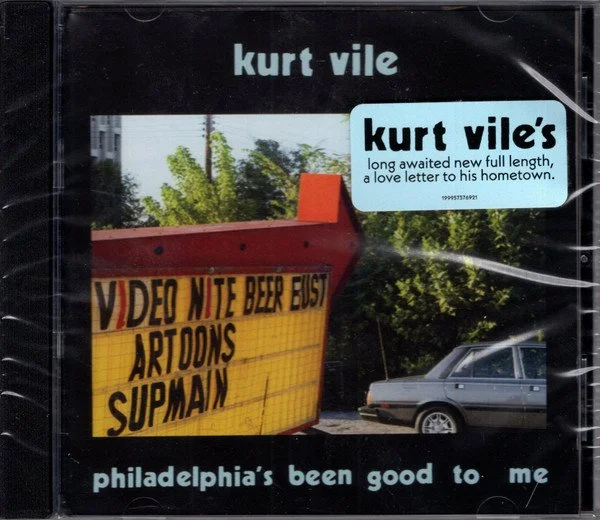
Kurt Vile - Philadelphia’s been good to me (Verve Records LP)
Kurt Vile is about as transparent as any artist you’re likely to come across. In listening to his music, life slows down a pace as a conversational tone sets in. Take the track “99 BPM” for instance—while the average rock song registers between 120 to 130 BPM, Vile is comfortable on the outskirts of the 10th to 20th percentile. He’s an artist that never gets sped up, taking the time to let his notes and words land with clarity.
On Philadelphia’s been good to me, Vile is in his comfort zone—close to home and connected with family and friends. “Holiday OKV” offers us a view of his happy place: his home studio constructed during the COVID-19 pandemic, so named (Overnite Kurt Vile) because of his penchant for creating late at night after his daughters are tucked into bed.
While the bulk of the album was created there, on lead single, “Chance to Bleed,” he teams up on vocals with Greg Cartwright (Oblivians, Reigning Sound), Natalie Hoffman (Nots, Optic Sink) and Ethan Buckler (Slint) in Memphis on a recording that was initiated with the Violators in Athens, Georgia and culminated with a final mix in Los Angeles. The song references his musical roots (“old time, lo-fi, DIY, rock ‘n’ roll nights”) and celebrates the communal power of music delivered with authenticity. “Things these days don’t seem to be connecting,” Vile remarks ahead of offering “That’s why I’m gonna sing it for you: Now you got a chance to bleed now.” Much like Dylan, The Stones and Iggy Pop before him, Vile uses blood as a signifier for laying everything on the line; to empty the tank down to the last drop. While fostering an initial impression of hunkering down in comfort, Philadelphia’s been good to me goes the distance, accepting no shortcuts in its quest for ultimate fulfillment. -Bruce Novak
UPCOMING
Prewn at Schubas Tavern - June 20, 8:00 PM
When she was growing up in the western suburb of Glen Ellyn, Izzy Hagerup started playing cello in second grade and her mother insisted that she continue with it through junior high. After completing eighth grade, she immediately ditched it for a guitar with no regrets. Eventually, she would go off to the liberal arts enclave of Hampshire College in Amherst, Massachusetts where she joined Blood Mobile before starting Prewn. She immersed herself in the tight-knit Western Mass music community for nine years, and last year relocated to Los Angeles to challenge herself in a locale where she had no pre-existing connections.
For Prewn, Hagerup has generally recorded solo, preferring the spontaneity of demos to capture a specific moment of time. She didn’t plan on releasing the material for her sophomore effort—System which came out last fall—thinking that the recordings sounded more like experiments, but after hearing Karl Helander’s mix, she came around. While her work has drawn comparisons to Fiona Apple and PJ Harvey, Hagerup is unique in her own right, and describes her process as “getting comfortable with discomfort.” After abandoning the cello years ago, she’s discovered a newfound appreciation for it, and has worked it in seamlessly alongside her inventive synth and guitar instrumentation. The Schubas show is sold out, and Hagerup will also get to enjoy another homecoming of sorts when she gets to play Wilco’s Solid Sound Festival towards the end of this month that takes place in North Adams, Massachusetts. —Bruce Novak
Brian Fallon & The Painkillers at Reggie’s Rock Club - June 22, 10:00 PM
Brian Fallon has a new solo album, Not Bad for New Jersey, coming out September 11th. He will be playing Riot Fest on Friday, September 18th with his solo backing band the Painkillers. In the meantime, he’s playing a few more intimate shows with the Painkillers—including this one at Reggies Rock Club in Chicago on 6/22. The new record is produced by Butch Walker and probably veers a bit more towards The Gaslight Anthem than some of his earlier solo efforts. There are three songs from the new record already out on streaming—the title track, plus “Better Before” and “Pearls.” Expect to hear a bunch of these new ones at this show, as well as some of his other solo and Gaslight favorites. Should be a packed / sweaty night at Reggies. -Tom Novak
Widowspeak at Schubas Tavern - June 28, 7:00 PM
For the degree of lushness that Molly Hamilton and Robert Earl Thomas interject into Widowspeak’s music, there’s an equal measure of soulfulness. Initially joining together as bandmates, and later as spouses, the pair maintain a deep connection that carries through to their songwriting. Their seventh full-length LP, Roses, just dropped this month, and instead of a bountiful bouquet, the album cover depicts a painting of twisting stems with some flowers in full bloom and others just starting to emerge from their buds. It reflects the couple’s even-handed view of love as not something linear and fully-formed, but something that requires nurturing to realize its potential. For a band known to be partial to smaller venues, expect a heartwarming level of intimacy to radiate from the stage and a swaying synchronicity amongst an appreciative sell-out audience. -Bruce Novak
UNCOVERED
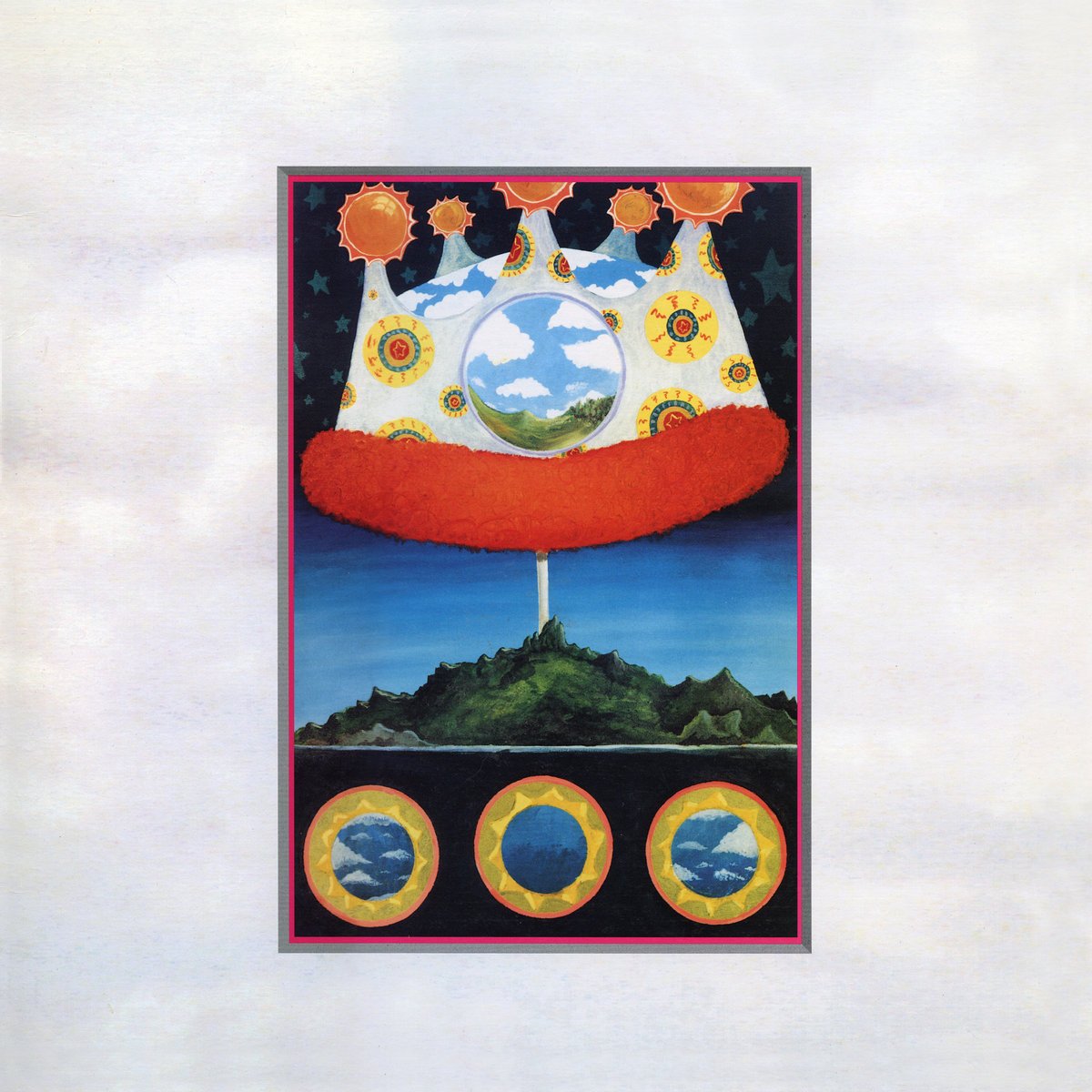
The Olivia Tremor Control - Music From The Unrealized Film Script: Dusk At Cubist Castle (Flydaddy Records LP)
Before they coalesced in Athens, Georgia in 1992, the roots of The Olivia Tremor Control began in Ruston, Louisiana where Will Cullen Hart befriended Jeff Mangum (Neutral Milk Hotel) and Robert Schneider (Apples In Stereo), forming the origins of the Elephant 6 collective, so named because of the inscription they wrote on the two-track cassette tape demos that they exchanged. Without a local record store within sixty miles of Ruston, the trio would record crude, amateur attempts on what they perceived punk rock to sound like. The original line-up of Olivia Tremor Control was composed of Cullen Hart on guitar, Mangum on drums and Bill Doss on bass.
That inception is insightful in understanding the dichotomy between the indie psych-pop and the experimental art rock that would comprise Olivia Tremor Control’s first album, Music From The Unrealized Film Script: Dusk At Cubist Castle. Though he guests on the album, Mangum had at that point moved on to start Neutral Milk Hotel, as Olivia Tremor Control expanded to a five-piece and incorporated additional instrumentation for a chamber pop direction. As a sprawling collection of over two dozen tracks, the album was highly conceptual and envisioned as a soundtrack for a fictional film. Included in the offering was a ten part suite for the composition “Green Typewriters,” none of the sections logically tie together, except by name.
There’s plenty of striking psychedelic pop in the likes of “Jumping Fences,” “Define A Transparent Dream” and “NYC-25” that builds upon the foundations forged by The Beatles, Beach Boys and Zombies. “The Opera House” enters into the space rock stratosphere with an arsenal of sound manipulations and backwards recording effects interspersed with a killer organ riff. A lovely acoustic guitar strum introduces “Memories of Jacqueline 1906,” shortly followed by ecstatic Pavement-like group shouts, but by the half-way point the song begins to disintegrate into scattered noodling until everything crashes down upon itself.
The contrasting textures of Dusk At Cubist Castle was aided by by Doss’ melodic pop inclinations set against Cullen Hart’s experimental tendencies. That divide would eventually cause the band to fracture after the release of their second album, Black Foliage: Animation Music Volume One that came out in 1999. Olivia Tremor Control would later officially reunite in 2009 and release a two song single a couple years hence. They were in the midst of recording a third album when Doss tragically died from an aneurysm in 2012. The remaining band members continued with the project and two new singles emerged in 2024, only to be followed shortly by the news that Cullen Hart had passed away as well. -Bruce Novak
We recommend listening along over at our Spotify page. Here’s this week’s content: